Liverpool is a loud city, and mostly that is a virtue. But when you have a dissertation to finish or an exam in three days, the constant hum of Bold Street and the Baltic Triangle stops being charming and starts being a problem. If you are hunting for quiet study spots in Liverpool, this guide covers the twelve genuinely distraction-free places worth your time — silent reading rooms, bookable study spaces, and the small handful of cafés where nobody is going to put a playlist on at volume.
Liverpool has an unusual advantage here. It has two large universities with substantial library estates, a Victorian civic library that is one of the most beautiful reading spaces in Britain, and a network of community libraries that stay reliably calm because most people have forgotten they exist. The result is that you can find silence in this city without paying for it, which is not true everywhere.
Below, each entry includes what the space is actually like, plus WiFi, power, noise and cost at a glance. We have been honest about access policies — several of the best rooms in Liverpool are university buildings with restrictions, and it is better to know that before you walk across town.
A note on hours: library and café opening times in Liverpool shift with term dates, staffing and the seasons. Treat everything below as a general pattern and check the venue’s current hours before setting off.
The 12 Quietest Places to Study in Liverpool
1. Central Library
Address: William Brown Street, city centre
Hours: Open seven days, closing in the evening — check the Liverpool Libraries site for current times
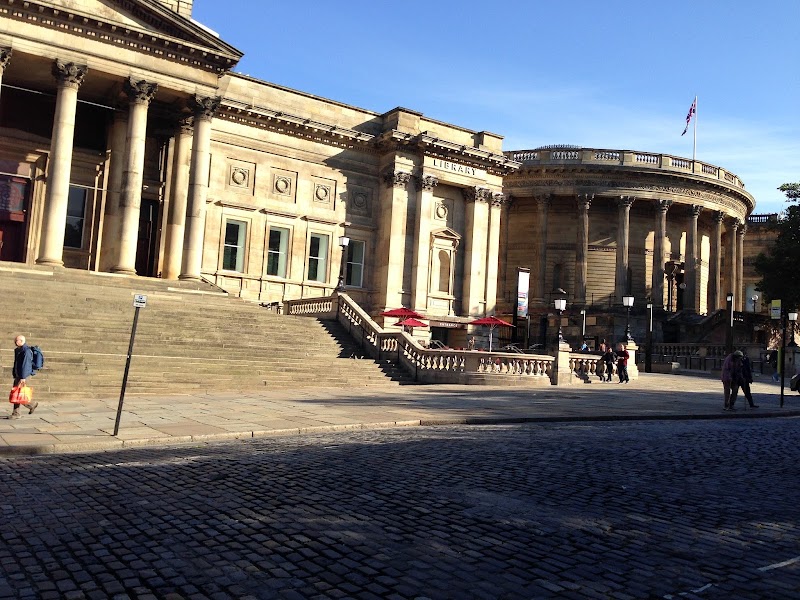
Liverpool Central Library is the best free study space in the city and, in the Picton Reading Room, contains one of the most extraordinary rooms in the country. The Picton is a circular, domed, galleried Victorian reading room modelled on the British Museum, and studying in it is a slightly absurd privilege for something that costs nothing.
The building pairs that historic core with a comprehensively modern extension: a soaring glass atrium, spiral staircases, a rooftop terrace with views across William Brown Street, and multiple floors of contemporary study space. Different floors carry different noise expectations, and they are actually enforced. The Picton and the upper reading areas are properly silent — not library-quiet, genuinely silent.
Power sockets are widespread, the WiFi is fast and free, and there is no membership requirement to sit and work, though joining the library is free and worth doing. It fills up during university exam periods, so arrive early if you want a Picton desk. Cafés and the World Museum are next door for breaks.
- WiFi: Free & reliable
- Outlets: Plentiful
- Noise level: Quiet
- Cost: Free
- Best for: solo, long sessions, deep focus
2. Sydney Jones Library, University of Liverpool
Address: Chatham Street, University of Liverpool campus
Hours: Extended hours during term, reduced outside it — check the university library site
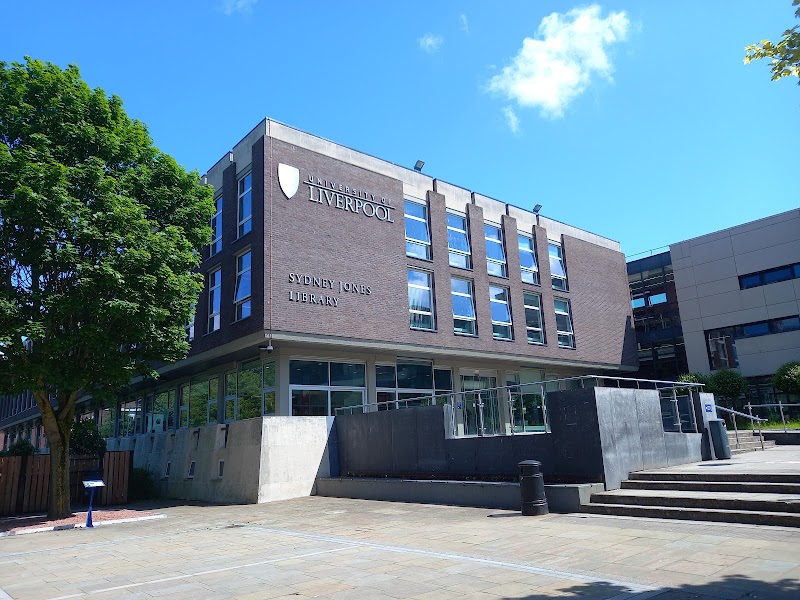
The Sydney Jones is the University of Liverpool’s main humanities and social sciences library and the default silent workspace for a large slice of the city’s student population. It was substantially refurbished in recent years and the difference shows: bright, well-designed floors, a good mix of individual carrels and group areas, and proper zoning between them.
The silent floors are seriously silent. There is a shared understanding among users that the upper levels are for concentration, and it holds even during the worst of exam season. Individual desks come with adequate space for a laptop plus books, which is not a given.
Access is the constraint. Entry requires a valid university card during most hours, though the university does operate visitor and alumni access schemes worth investigating if you are not a current student. During term the building runs long into the evening and stays busy throughout.
- WiFi: Strong (eduroam)
- Outlets: Plentiful
- Noise level: Quiet
- Cost: Free (students and staff)
- Best for: solo, long sessions, silent work
3. Harold Cohen Library
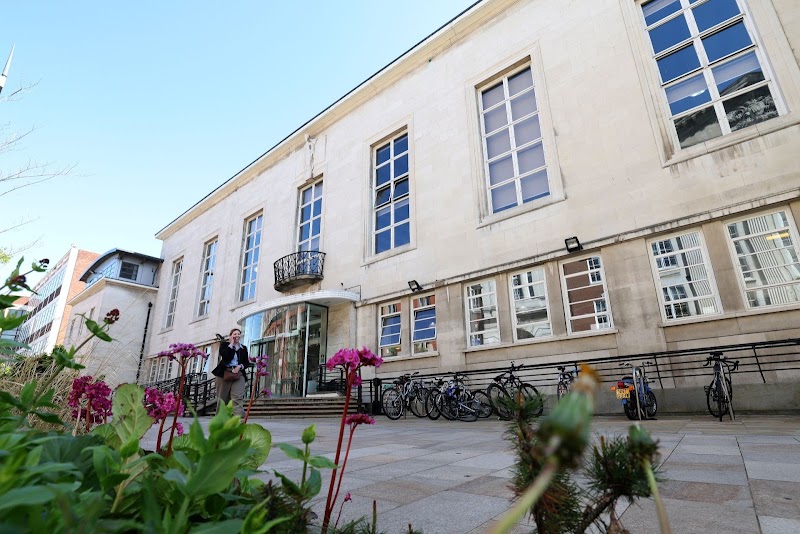
Address: Ashton Street, University of Liverpool campus
Hours: Extended term-time hours — check the university library site
Harold Cohen is the University of Liverpool’s science, engineering and medical library, and it is consistently the quieter of the two main university libraries. Because it serves a more specialised population, it never picks up the general foot traffic that the Sydney Jones does, which makes it the better bet when you need to disappear.
The building has an older, more traditional character — heavier furniture, a stiller atmosphere, the particular hush of a place where everyone is working through something difficult. The silent study areas are excellent. Even in peak weeks, the upper floors tend to have space when other buildings have run out.
It has strong desk lighting, plenty of power, and computer clusters for those who need them. Access again requires a university card during most hours. If you are a Liverpool student and the Sydney Jones is heaving, walk the extra five minutes — it is almost always worth it.
- WiFi: Strong (eduroam)
- Outlets: Plentiful
- Noise level: Quiet
- Cost: Free (students and staff)
- Best for: solo, silent work, long sessions
4. City Campus Library, Liverpool John Moores University

Address: Maryland Street, LJMU City Campus
Hours: Extended hours in term time, including late opening during assessment periods — check the LJMU site
LJMU’s Aldham Robarts building on the City Campus is the university’s main city-centre library and one of the better-designed study buildings in Liverpool. It is arranged over several floors with clearly signposted zoning, so you can pick your noise level rather than hoping for the best.
The silent floors work as advertised. There are individual study booths, bookable group rooms for when you need collaboration, and a good supply of standard desks in between. The building is bright and modern, with large windows that make long winter sessions considerably more bearable.
It is well located for anyone living in the city centre or the Georgian Quarter, sitting within easy walking distance of both. Access requires an LJMU card for most of the opening hours. During assessment periods the library extends its hours significantly, which is when it becomes the most useful late-evening quiet space in central Liverpool.
- WiFi: Strong (eduroam)
- Outlets: Plentiful
- Noise level: Quiet
- Cost: Free (LJMU students and staff)
- Best for: solo, groups (bookable rooms), assessment periods
5. Toxteth Library

Address: Windsor Street, Toxteth
Hours: Varies by day — check the Liverpool Libraries site
Toxteth Library is a Grade II listed Carnegie library and one of the most underrated quiet study spaces in Liverpool. It reopened after a community campaign and a restoration, and the result is a genuinely lovely building — high ceilings, original features, generous natural light — that almost nobody thinks to study in.
That obscurity is the point. Where Central Library becomes a scrum during exam season, Toxteth stays calm. You can reliably get a table, the room is quiet by default rather than by enforcement, and the staff are used to people settling in for a few hours.
Facilities are more modest than the flagship — fewer sockets, a smaller footprint, shorter opening hours. Bring a charged laptop and check the day’s hours before travelling. For students living south of the city centre, it is a far better daily option than commuting into town.
- WiFi: Free
- Outlets: Limited
- Noise level: Quiet
- Cost: Free
- Best for: solo, reading, distraction-free afternoons
6. International Library

Address: Central Liverpool
Hours: Check current opening times before visiting
The International Library is a smaller, specialist collection that functions as an excellent overflow option when the larger buildings are full. It carries the atmosphere of a working reference library rather than a public lending branch, which means the default behaviour is quiet and the people around you are generally there to read.
The space is compact and study-oriented, with table seating and a collection that rewards browsing if your subject is anywhere near languages, international affairs or area studies. It is not a place for group work or conversation, which is precisely why it makes this list.
Because it is small, seating is finite and hours are narrower than the main library. Treat it as a targeted option — a place to go when you know you need two or three uninterrupted hours and the Picton is packed.
- WiFi: Free
- Outlets: Limited
- Noise level: Quiet
- Cost: Free
- Best for: solo, reading, short focused sessions
7. The Library Coffee House

Address: South Liverpool
Hours: Daytime opening — check current hours
The name is not accidental. The Library Coffee House trades on a bookish, unhurried atmosphere, with shelves, soft seating and a deliberately low-key soundtrack. It is one of the very few Liverpool cafés where working on a laptop for two hours feels entirely normal rather than mildly antisocial.
The room is small enough that conversation stays contained and nobody raises their voice. It is not silent — this is still a café, and there is a coffee machine — but the ambient level sits well below the Bold Street average. Headphones plus a corner table gets you close to proper concentration.
The trade-off is capacity. There are not many tables, and the ones near power are claimed early. Weekday mornings are the sweet spot. Buy something reasonably often if you are staying a while — small independents like this survive on turnover, and the goodwill matters.
- WiFi: Free & reliable
- Outlets: Limited
- Noise level: Quiet to Moderate
- Cost: Budget-friendly
- Best for: solo, reading, morning sessions
8. Mother Espresso

Address: Wood Street, Ropewalks
Hours: Daytime opening — check current hours
Mother Espresso occupies a handsome old building in Ropewalks and is one of the more serious coffee operations in the city. For study purposes what matters is the layout: high ceilings, generous spacing between tables, and an interior that absorbs sound rather than bouncing it around.
The atmosphere is calm and adult. The clientele skews towards people working, reading or having quiet conversations, and there is none of the churn you get in the chains on Church Street. It is a good place to do work that needs thought but not silence — planning, editing, structuring an argument.
It gets busy at lunch and at weekends, when it becomes considerably less suitable. Aim for mid-morning or mid-afternoon on a weekday. Sockets are present but not abundant, so charge before you arrive. Central enough to combine with a Central Library session in the same day.
- WiFi: Free & reliable
- Outlets: Limited
- Noise level: Moderate
- Cost: Mid-range
- Best for: solo, editing and planning work, weekday sessions
9. Bean Coffee Roasters

Address: Multiple Liverpool locations including the city centre
Hours: Daytime opening — check current hours by location
Bean is a Liverpool-founded roastery with several sites around the city, and the variation between them is worth knowing. The busier city-centre branches are too hectic for real work, but the quieter locations offer proper tables, good light and a manageable noise floor.
Where it succeeds is in feeling like a place you are allowed to stay. Staff do not hover, the seating is comfortable enough for a couple of hours, and the coffee is good enough to justify a second one. The morning stretch before the lunch rush is reliably calm across most branches.
Scout the location nearest you before committing to a session. Ask about WiFi at the counter — coverage is generally reliable but varies by site. Combine with a library visit rather than trying to do a full day here.
- WiFi: Free & reliable
- Outlets: Limited
- Noise level: Moderate
- Cost: Budget-friendly
- Best for: solo, short to medium sessions
10. Core Coffee & Kitchen
Address: Liverpool city centre
Hours: Daytime opening — check current hours
Core is a café-and-kitchen operation, which for study purposes is a meaningful advantage: you can arrive, work, eat properly and continue without relocating. Sessions that break for a food run rarely regain their momentum, and Core removes that problem.
The space is bright and reasonably roomy, with table seating that suits laptops. Noise is moderate and conversational rather than boisterous. It is not a silent-study venue and should not be treated as one, but for the middle tier of work — writing, admin, reading that does not require total concentration — it holds up well.
Avoid the lunch peak, when the kitchen side takes over and the tables turn quickly. Mid-afternoon is the productive window. Order food rather than nursing a single flat white if you intend to stay past an hour.
- WiFi: Free & reliable
- Outlets: Limited
- Noise level: Moderate
- Cost: Budget-friendly
- Best for: solo, work-and-eat sessions, afternoons
11. Thoughtfully Cafe
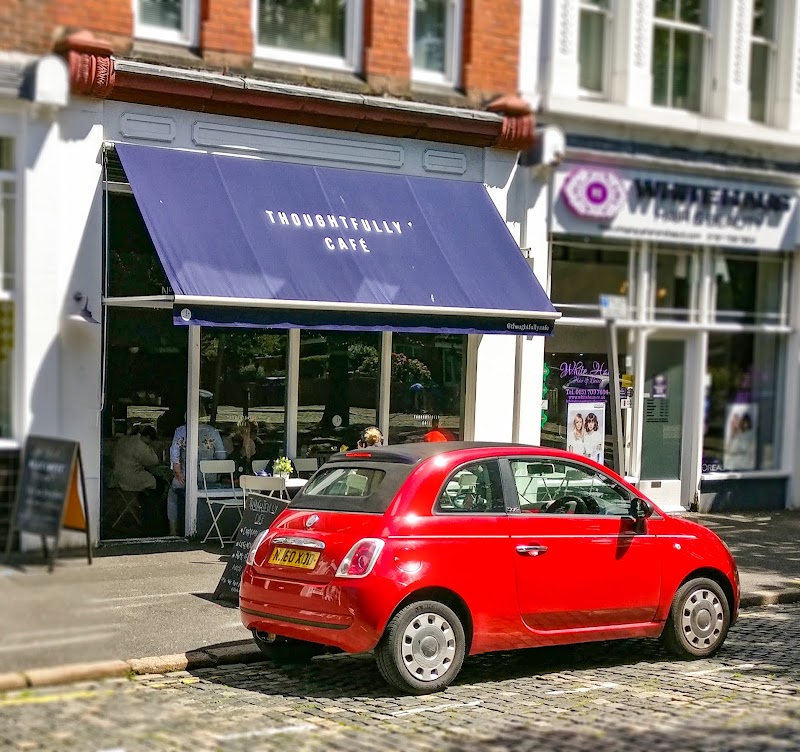
Address: Liverpool
Hours: Daytime opening — check current hours
Thoughtfully is a small independent that leans deliberately calm — considered interior, unhurried service, and a general atmosphere of people not being in a rush. That character makes it one of the more workable café options in the city for anyone who finds most coffee shops overstimulating.
The room is intimate, which cuts both ways. Sound stays low because there simply are not many people in it, but that also means table availability is genuinely limited and a busy hour can shut you out entirely. Arriving early is not optional.
It suits reading and reflective work better than heavy laptop grinding. If your afternoon involves getting through a stack of journal articles or thinking through a structure, it is close to ideal. If you need six hours and three power outlets, go to Central Library instead.
- WiFi: Free
- Outlets: Scarce
- Noise level: Quiet
- Cost: Budget-friendly
- Best for: solo, reading, quick drop-ins
12. DoES Liverpool and City-Centre Coworking

Address: DoES Liverpool in the city centre; other operators including Avenue HQ Mann Island, Clockwise Royal Albert Dock, Liverpool and Spaces Ropewalks
Hours: Day passes and memberships; several offer extended or 24-hour member access — check each operator
If you need reliable silence on a recurring basis, coworking is the structural answer in Liverpool. DoES Liverpool is the long-established community-oriented option and sells day passes without requiring a membership commitment, which makes it unusually accessible for students.
The environment is what libraries would be if they had better chairs: proper desks, fast wired-grade internet, unlimited coffee, phone booths for calls, and an unspoken norm that everyone present is working. Nobody will interrupt you and nobody will need your table. For dissertation writing or professional exam preparation, the difference over a café is substantial.
Cost is the obvious barrier, though day rates are modest and several operators run student discounts worth asking about directly. Avenue HQ Mann Island and Clockwise Royal Albert Dock, Liverpool sit in genuinely pleasant waterfront locations, while Spaces Ropewalks and Ember Cowork put you in the middle of the creative quarter. Most will let you trial a day before committing.
- WiFi: Strong
- Outlets: Plentiful
- Noise level: Quiet
- Cost: Mid-range
- Best for: solo, long sessions, regular deep work
Free & Budget Quiet Study Options in Liverpool
Liverpool is a good city for studying without spending money. The public library network is free to join, free to use and imposes no purchase requirement, and it includes one of the finest reading rooms in Britain. Central Library alone would justify the point, but the branch network is the underrated part — Toxteth, Sefton Park, Allerton and the other community libraries are quieter than the flagship precisely because fewer people think of them.
Students at either university have the strongest position. Between the Sydney Jones, Harold Cohen and the LJMU City Campus library, there is more silent study capacity in central Liverpool than most cities of comparable size offer, and it extends late during assessment periods. Check your institution’s SCONUL Access arrangements too — they can open up reciprocal borrowing and study rights at other UK university libraries, which is useful if you go home during holidays.
Museums and galleries provide a further free tier. The Central Library sits directly alongside the World Museum and the Walker Art Gallery, both free to enter, both containing quiet corners and cafés. They are not study spaces as such, but they make excellent breaks that do not cost anything and do not break your concentration the way a trip to a shopping centre would.
Quiet Study Spots in Liverpool by Situation
You need absolute silence. The Picton Reading Room at Central Library, or the silent floors at Harold Cohen if you have university access. These are the only two places in Liverpool where the quiet is properly enforced rather than merely expected.
You are revising for exams. Go early and go to a branch library. Toxteth or another community branch will have a free table at 10am when Central Library is already full. Booking a study room at the LJMU City Campus Library in advance is the other reliable move.
You need quiet but also need to talk occasionally. The bookable group rooms at the university libraries are designed for exactly this. Failing that, Core Coffee & Kitchen and Bean Coffee Roasters tolerate low conversation without anyone minding.
You are not a student. Central Library, the branch network and the International Library are all fully open to you at no cost. For a paid step up, DoES Liverpool sells day passes without a membership commitment, which is the cheapest route to genuine silence in the city.
You live south of the centre. Toxteth Library and The Library Coffee House keep you out of town entirely. The commute you save is an hour of study you keep.
It is the weekend. University libraries reduce their hours and the city-centre cafés fill with shoppers. Central Library is the most reliable weekend option, and the upper floors stay calm even when the atrium is busy.
How to Find a Quiet Place to Study in Liverpool
Understand the zoning. Liverpool’s best study buildings all operate tiered noise levels, and they are signposted for a reason. Walking to the correct floor takes ninety seconds and is the difference between a productive session and a frustrating one. Do not settle for the first free table you see on the ground floor.
Go early, particularly in exam season. Central Library and the university libraries fill up by mid-morning between April and June and again in December and January. Arriving at 9am rather than 11am changes the entire day.
Check access before you travel. Several of the quietest rooms in Liverpool are university buildings with card entry. If you are not affiliated, look at visitor and alumni schemes in advance rather than discovering the policy at the barrier.
Be realistic about cafés. No café in Liverpool is silent, and treating one as a substitute for a library leads to a wasted afternoon. Use cafés for the work that survives background noise — planning, editing, admin, familiar reading — and reserve libraries for anything that requires sustained concentration.
Carry a power bank. Sockets are plentiful in the libraries and scarce almost everywhere else. This single item removes the most common reason a session ends early.
For a broader look at the city, including cafés, late-opening spots and campus options, see our full guide to the best places to study in Liverpool. You can browse every city we cover on the Study Spots by City hub, and if you are comparing options across the north west, our Manchester study spots guide covers the neighbouring city in the same detail.
Final Thoughts
Liverpool punches above its weight for quiet study, and the reason is largely civic rather than commercial. The city built a magnificent public library in the nineteenth century, restored and extended it in the twenty-first, and kept a network of community branches going through years when other cities closed theirs. Two large universities added substantial silent-study capacity on top. The result is that the best quiet study spaces in Liverpool are free, and that is not a small thing when you are a student.
The practical advice is simple. Make Central Library your default and learn which floor suits which kind of work. Keep a branch library like Toxteth in reserve for the weeks when town is unbearable. Use the cafés on this list for the tasks that genuinely tolerate noise, and stop pretending the ones that do not. If you are studying here for three or four years, working out this rhythm early will save you more time than any productivity system — and it will cost you nothing more than a library card.
Frequently Asked Questions
Where is the quietest place to study in Liverpool?
The Picton Reading Room at Liverpool Central Library is the quietest publicly accessible study space in the city, and silence is genuinely enforced there. For students with university access, the silent floors of the Harold Cohen Library are consistently the calmest option on campus, largely because it serves a more specialised population than the Sydney Jones Library.
Can non-students use Liverpool university libraries?
Entry to the University of Liverpool and LJMU libraries requires a valid university card during most opening hours. Both institutions operate visitor and alumni access schemes, and students at other UK universities may be eligible through SCONUL Access. If you are not affiliated, Liverpool Central Library and the community branch network are fully open to everyone at no cost.
Are there quiet cafes in Liverpool suitable for studying?
No Liverpool cafe is silent, but several are calm enough for focused work. The Library Coffee House, Thoughtfully Cafe and Mother Espresso all keep a low noise floor, particularly on weekday mornings before the lunch rush. Use cafes for planning, editing and familiar reading, and reserve the libraries for work that needs sustained concentration.
Where can I study for free in Liverpool?
Liverpool Central Library and every branch in the city network are free to use with no purchase or membership required, though joining is free and worth doing. Toxteth Library and the other community branches are reliably quieter than the flagship because fewer people think to use them. The International Library offers a further free option for focused reference work.