Atlanta is a driving city, and that changes the charging problem in a way most study guides miss. You are rarely two minutes from a backup option the way you are in a dense downtown. When you commit to a spot here, you are often committing to it for the afternoon — which makes knowing whether there is power at the table considerably more important than it would be somewhere you can walk out of and try the next block.
This guide covers where power actually tends to be in Atlanta study spaces, how to judge a room before you unpack, and what to do when the wall seats are gone. It does not tell you how many outlets any particular place has, because furniture moves and renovations happen. The useful knowledge is the pattern: understand how a building of a given type is wired and you can read a room you have never set foot in.
The three tiers of power in Atlanta
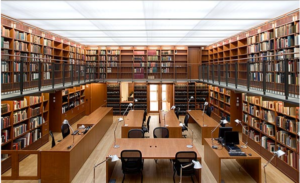
Purpose-built study space. Public library reading rooms, university libraries, campus learning commons. These are designed on the assumption that everyone arrives with a laptop, so power tends to be built into desks, carrels and floor boxes rather than added as an afterthought. Aim here for anything longer than a couple of hours.
Coffee shops that adapted. Atlanta has a deep independent coffee scene, and a good number of those places worked out years ago that weekday laptop customers are their bread and butter. You can usually tell from the doorway: long communal tables, chairs along the walls, a visible run of outlets down one side of the room.
Everywhere else. Rooms designed for conversation, where any outlet you find was put there for the vacuum. Fine for reading and longhand. Not where you start a long session on a low battery.
If power is secondary and you just want somewhere good to sit, our general guide to the best places to study in Atlanta covers a wider spread.
The public library system: free, and built for this
The Atlanta-Fulton Public Library System is the honest answer to this question, and it costs nothing. The Central Library downtown on Margaret Mitchell Square is the flagship — a large, distinctive modernist building with multiple floors of seating and the kind of desk provision that assumes devices. Like every central library in a major city, the most obvious seats near the entrance go first and the upper floors hold out much longer.
The Auburn Avenue Research Library on African American Culture and History in Sweet Auburn is a quieter and genuinely special alternative, with proper reading-room seating. Branches such as Buckhead and Ponce de Leon serve their immediate neighborhoods rather than the whole city, which generally means a calmer weekday and less competition for the seats along the wall.
The pattern worth carrying with you: any branch built or substantially renovated in recent years was designed around device charging, and the newer the building the better your odds. Older branches are more of a hunt. Hours vary across the system and change seasonally, so check current hours before you drive over rather than relying on what you remember.
University libraries, and who can actually get in
Atlanta has an unusual concentration of serious academic libraries, and access rules differ sharply between them.
Georgia Tech’s library in Midtown has been through a major reimagining in recent years and is built around how students actually work now, which means power throughout. Georgia State’s library downtown serves a very large student body and is scaled accordingly. Emory’s Robert W. Woodruff Library out in Druid Hills is a major research library. The Atlanta University Center Robert W. Woodruff Library serves Spelman, Morehouse and Clark Atlanta together and is the academic heart of the AUC.
Visitor policies vary by institution and by time of year, and several tighten considerably during finals — which is, inevitably, exactly when you most want a desk. The durable advice: if you are a student anywhere in Atlanta, your own institution’s library is almost certainly the best-powered room available to you and it is already paid for. If you are not affiliated with a university, treat campus libraries as a bonus rather than a plan and build your week around the public system.
Coffee shops: how to read a room in thirty seconds
Atlanta’s independent coffee scene is strong and several long-established names are fixtures of the city’s working-from-a-cafe culture. Octane Coffee has been part of that conversation for years on the Westside and in Grant Park. Dancing Goats has locations around Decatur and Ponce. Condesa Coffee is a fixture in the Old Fourth Ward. San Francisco Coffee Roasting Company has been a neighborhood standby in Virginia-Highland and Decatur.
Rather than promise you power at any one of them — which nobody can honestly do, because layouts change — here is how to read any cafe the moment you walk in:
- Follow the walls. In almost every coffee shop the power runs around the perimeter. The middle of the room is for conversation; the edges are for cables.
- Find the long table. A communal table installed in the last decade very often has power built into it or running underneath. A small round two-top almost never does.
- Check the window counter. Bar seating facing the window is the classic laptop position and is frequently wired, because that is who it was built for.
- Watch the regulars. If three people with laptops are clustered in one corner and the rest of the room is empty, that corner is where the outlets are. This is the single most reliable signal in the building.
- Just ask. Staff know where every working outlet is, including the one behind the plant, and somewhere that welcomes laptop customers will tell you without any fuss.
Some places restrict laptops at peak times, particularly on weekends, and a few switch the power off when they are slammed. That is a business decision rather than an insult; the courteous response is to pack up.
Neighborhood by neighborhood
Midtown has the highest density of institutional space — Georgia Tech, the arts district, hotel lobbies, large chain cafes. Good on a weekday, busiest at lunch, and quieter on weekends than people expect.
Downtown gives you the Central Library and Georgia State, so the free options are strong, though the neighborhood empties out in the evening.
Old Fourth Ward and Inman Park are where the independent cafe density is highest, with the BeltLine connecting them on foot. Ponce City Market sits in the middle of it and has public seating, though it is a shopping and food destination first and power is incidental.
Virginia-Highland and Poncey-Highland sit in a comfortable middle: a decent spread of cafes, a library branch, and less competition than Midtown.
Decatur is the quiet winner for a long session. It is a walkable downtown with its own library, several long-running coffee shops, Agnes Scott nearby, and a studying culture that means nobody rushes you. It is also straightforward to reach on MARTA, which matters in this city.
West End and the AUC are campus territory with the cafes to match, built around students rather than around tourists.
When every outlet is taken
This will happen, especially during finals and on rainy Saturdays. What actually helps:
Carry a short extension cord or a power strip. One outlet becomes three, and offering the other two to the people beside you turns a territorial problem into a friendly one. This one piece of kit solves more charging problems than any amount of research.
Charge in bursts rather than continuously. Plug in over coffee while you do the reading, then move to an unpowered seat for the writing. More flexible than holding one wall seat all day.
Go up. In any multistory library the ground floor fills first and the top floor last.
Shift your timing. Mid-morning on a weekday is the quietest useful window in most Atlanta study spaces. Sunday afternoon is the worst.
Pick two spots, not one. Because this is a driving city, the cost of a wasted trip is higher here than almost anywhere. Having a second option in the same neighborhood is the difference between a minor annoyance and a lost afternoon.
If your constraint is time of day rather than power, see our guides to 24-hour study spots in Atlanta and late night study spots in Atlanta. If connectivity is the sticking point, there is free wifi study spots in Atlanta.
Frequently Asked Questions
Where to study when the library is closed?
In Atlanta the realistic answers are a coffee shop with later hours, a campus building if you are a student with card access, or a large mixed-use space such as Ponce City Market that keeps longer hours than the libraries around it. Chain cafes in Midtown and around the universities generally run later than independents. If you are on a campus, your student center and any 24-hour study room your institution runs will outlast every public option in the city. Hours shift constantly, so check before you drive.
Where can I sit and work near me?
Start with the nearest public library branch, because it is free, quiet and designed for exactly this. If that is closed or full, the next best bets in Atlanta are an independent coffee shop with a communal table, a bookstore cafe, or a hotel lobby if you have a reason to be there. Look for somewhere with perimeter seating and other people already working — a room with three laptops in it will tolerate a fourth, and it is also where the power is.
Where to study for free near me?
The Atlanta-Fulton Public Library System is free and open to everyone, from the Central Library downtown to the neighborhood branches, and no purchase is expected. University students have free access to their own campus libraries. Beyond that, most coffee shops will not object to a long session provided you are buying something at a rate you would be comfortable explaining, and large public spaces such as Ponce City Market have seating that costs nothing to use even if power there is hit or miss.