Every London study session runs on a clock you did not choose: the one on your laptop battery. You can find a quiet corner, you can find decent coffee, you can even find a seat on a Saturday in Soho — and none of it matters once the charge indicator turns red and you are packing up two hours earlier than you planned.
Plug sockets are the scarcest resource in London’s working spaces, and they are scarce for a reason. Most of the city’s cafes occupy Victorian and Edwardian buildings that were wired long before anyone brought a laptop into one, and in a city where a table turns over several times an hour, a socket is an invitation to stay. Some places extend that invitation deliberately. This guide is about those places: the libraries, reading rooms and cafes across London where mains power is part of how the room is meant to work, organised by what you are actually trying to do.
The great reading rooms, where power is designed in
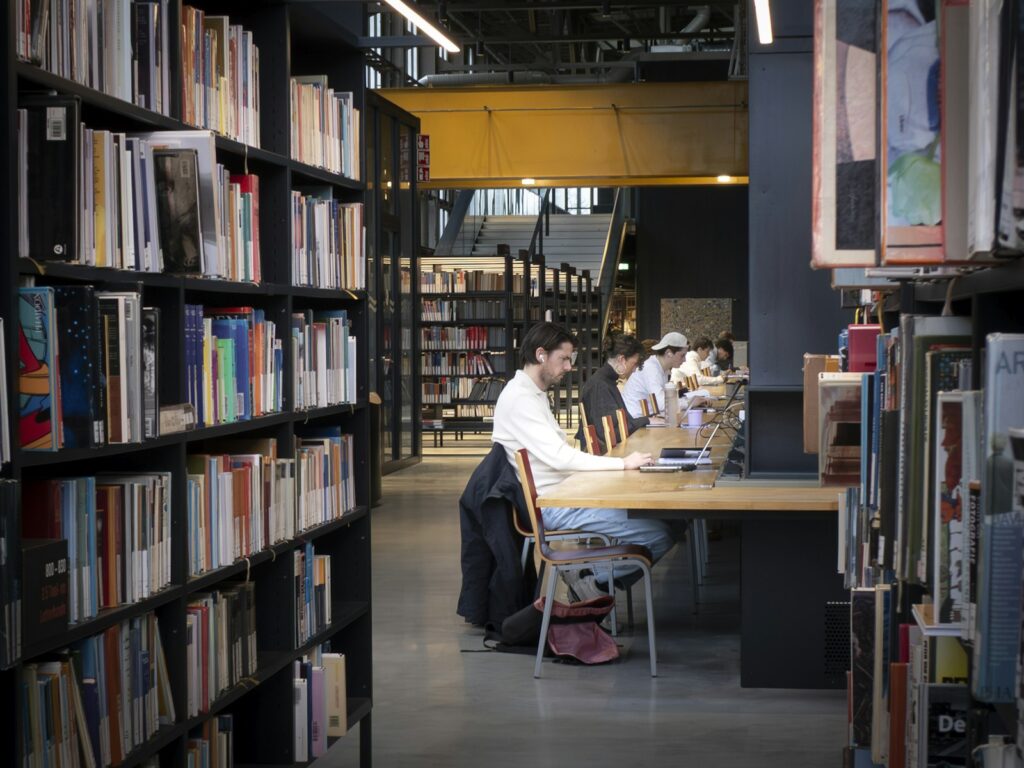
London’s research libraries are the single best answer to this problem, because a desk built for a researcher is a desk built for someone who stays all day.
The British Library at St Pancras is the obvious starting point. The reading rooms require a reader pass, but the building’s public areas and upper-level seating are open to anyone, and the whole place is designed around people working for long stretches. It is also the most central option in the city for anyone arriving by train. Access rules and opening times both change, so check the current position before you make the trip.
Senate House Library in Bloomsbury is the one Londoners consistently overlook. It belongs to the University of London, sits in one of the finest interwar buildings in the city, and offers various routes to access for people who are not University of London students — membership tiers, day access, reciprocal arrangements. The desks are proper research desks. If you are willing to do a little paperwork, this is among the best working environments in central London.
The Maughan Library on Chancery Lane is King’s College London’s main humanities library, housed in the former Public Record Office. The round Reading Room there is one of the more remarkable places to open a laptop in Britain. Access is primarily for King’s students and members, so confirm what applies to you first.
UCL Main Library in the Wilkins Building is similar in character and similar in access terms — built for its own students, with limited visitor arrangements. The London Library in St James’s Square is a subscription institution rather than a public one, and if you work in London long-term it is worth understanding what membership actually buys: a wired desk in central London, available on your terms.
Public buildings that welcome you without paperwork
If the access requirements above are more friction than you want, the city has genuinely open alternatives.
Southbank Centre is the well-kept secret of this category. The Royal Festival Hall foyers function, in practice, as one of London’s largest free workspaces: multiple levels of tables and soft seating, power in various spots along the walls and at the bar-height counters, and a culture that has long tolerated people with laptops. It is not silent — there is often music and always footfall — but for anyone who works better with a little ambient noise, the river views and the lack of any obligation to buy make it hard to beat.
The Barbican Centre operates on a comparable principle, with foyer seating across several levels and a similar tolerance for long stays. Both venues are busiest at weekends and in the hour before a performance, so a weekday morning is the move.
Foyles on Charing Cross Road deserves its own mention. The cafe floor in a large bookshop is a different proposition from a standard coffee shop: the whole business model assumes browsing and lingering. It suits a couple of focused hours rather than a full day.
Beyond central London, the borough library networks are the most underused infrastructure in the city. Idea Store Whitechapel in Tower Hamlets, Canada Water Library in Southwark and Kensington Central Library are all purpose-built or thoroughly refurbished public study spaces, and because they are borough facilities they are open to anyone who walks in. Newer builds like these were specified in an era when every visitor arrived with a device, which makes them a far better bet for power than an older branch.
Cafes with a genuine laptop culture
This is the category where you have to read the room, so treat what follows as a guide to likelihood rather than a promise.
Notes Coffee Roasters & Bar, Trafalgar Square is a reliable central option and large enough that a seat near a wall is usually findable outside peak hours. Formative Coffee and Coffee Island are both solid for a focused session, and PROJECT68 is worth trying if you want somewhere less obvious than the chains.
Blank Street Coffee has expanded across London and the sites are consistent in layout, which is genuinely useful: once you know how one of their rooms is arranged, you know roughly what to expect at the next. The flip side is that the smaller units are built around quick turnover rather than long sittings, so the larger branches are the ones to seek out.
Work + Play is, as the name suggests, built for exactly this use. It belongs to a small but growing category of London venues that are cafes by appearance and workspaces by intent — and those are always the best bet when power matters, because the proprietors chose to be in this business.
When it is worth paying for certainty
Some sessions are too important to gamble on. A deadline, a dissertation chapter, a day of interviews: for those, a day pass at a workspace removes every variable at once — a guaranteed desk, guaranteed power, a reliable connection and quiet.
Second Home Spitalfields in the east, Paddington Works in the west, Uncommon Holborn in the middle, The Ministry in Borough to the south and The Landing by Spacemade all offer flexible arrangements of one kind or another. Day-rate availability and terms differ between them and change over time, so enquire directly rather than assuming. The broader point stands: once a day of your time is genuinely valuable, the cost of certainty is usually the cheapest part of the day.
How to find a socket in a room you do not know
These habits are more useful than any list, because they travel with you.
- Walk the perimeter before you sit. Sockets follow walls, pillars and skirting boards. Tables in the middle of a floor are almost always the last to be wired.
- Look underneath. Library desks frequently have power fixed beneath the desktop or behind the divider, where you will never see it from standing height.
- Read the crowd. If three people with laptops are clustered along one wall, that wall has power. It is the most reliable signal in any room.
- Bar-height counters are a good sign. Venues that install long counters usually install power along them, because that is who the counter is for.
- Just ask. Library and cafe staff know exactly which seats are wired. Almost nobody asks them.
- Taped-over sockets are broken, not banned. Leave the tape where it is and find another seat.
What to carry in London specifically
A laptop-capable power bank solves this problem permanently and makes every seat in the city usable, including the ones with the view. If you buy one thing after reading this, buy that.
After that, two London-specific notes. First, carry a short extension lead or a compact multi-way adaptor: British sockets are large and often awkwardly placed near the floor, and a lead turns an unreachable socket into a usable one. Second, if you are travelling in from outside the UK, bring a proper adaptor rather than relying on a venue to lend you one.
And a word on etiquette, because it matters more in London than most places. Rents are brutal and tables are the stock in trade, so a cafe that lets you plug in is giving up revenue to do it. Buy something, buy again if you stay beyond an hour or two, avoid the lunch rush, and never unplug someone else to claim their socket. The rooms that welcome laptops stay that way because the people in them behave well.
Where to go next
If power is not your real constraint, the rest of the London coverage is split by what is: the general guide to places to study in London is the overview, 24-hour study spots in London covers the overnight problem, quiet study spots in London is for when noise is what defeats you, and free wifi study spots in London covers connectivity.
Frequently Asked Questions
Which coffee shop has the most plug sockets in the UK?
There is no reliable published count, and any specific claim you read should be treated with suspicion — chains refit individual sites constantly and no two branches of the same brand are wired alike. The more useful question is which operators design for laptop users as a matter of policy. In practice, larger-format sites in any chain are a better bet than small ones, bookshop cafes and venues that market themselves as work-friendly are better again, and the single most reliable category is not a coffee shop at all but a public library or a foyer space like the Southbank Centre or the Barbican.
Can you sit in a cafe and work in London?
Generally yes, with conditions that are understood rather than posted. The expectation is that you buy something on arrival and buy again if you settle in for a long stretch. Many venues restrict laptops during the lunch rush, some have a no-laptop policy at weekends, and a few ban them outright — look for a sign, or glance at whether anyone else has a screen open. One table per person, headphones for calls, and reading the room during a busy spell will keep you welcome anywhere.
Do London libraries let non-members use their desks?
It depends entirely on which kind of library. Borough public libraries — the Idea Stores, Canada Water, Kensington Central and the rest of each council’s network — are open to anyone, with no membership needed to sit at a desk. University libraries such as the Maughan and UCL Main are built for their own students and offer only limited visitor access. The British Library sits in between: public areas open to all, reading rooms by reader pass. Senate House Library and The London Library both offer membership routes specifically aimed at people with no university affiliation. If you want a wired desk today with no paperwork, start with your borough.