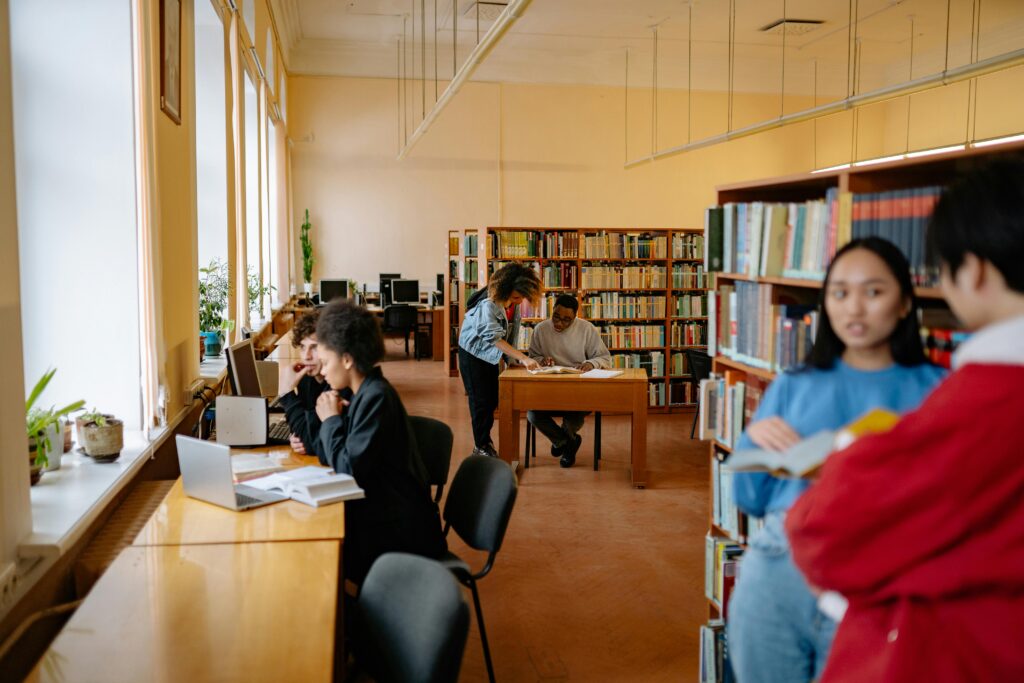
Finding a great place to study doesn’t have to cost anything. In fact, some of the best study environments in any city are completely free — and they’re often quieter, better-equipped, and more study-friendly than paid alternatives. The challenge is knowing where to look.
This guide covers the best free places to study, how to find them near you, and how to evaluate whether a free spot is actually worth your time.
Why Free Study Spots Are Often Underrated
There’s a common assumption that paying for a coffee gets you a better study environment. Sometimes that’s true — cafes often have comfortable seating, food access, and a pleasant ambient energy. But the best free study options consistently outperform cafes on the dimensions that matter most for actual studying: quiet, space, ergonomic seating, WiFi reliability, and how long you can stay without spending money.
The average serious study session at a cafe costs $8–$15 in coffee and food. Over a semester of regular use — say, four sessions per week for fifteen weeks — that’s $480–$900 in coffee shop spending, conservatively. That’s a meaningful sum that free alternatives eliminate entirely.
1. Public Libraries — The Best Free Study Resource in Any City
Public libraries are the most underutilized study resource in America. Almost every US city has a public library network, many branches are modern and well-equipped, and access is free with a library card that typically takes five minutes to obtain.
What great public libraries offer for free:
- Quiet study areas, dedicated silent floors, and often bookable private study rooms
- High-speed WiFi (often faster than many cafes)
- Plentiful outlets and ergonomic seating
- Access to academic databases, reference materials, and digital resources that would cost hundreds of dollars otherwise
- Printing, scanning, and copying services (sometimes at a small per-page fee)
- Extended weekday hours (typically until 8–9pm)
- A culture that enforces quiet and focused behavior
How to find your nearest library: a quick search for “[your city] public library” will surface the system’s website with a branch locator. Most systems let you filter by amenities — look for branches with study rooms, late hours, or computer labs depending on your needs.
StudyNearby also catalogs public library locations across hundreds of US cities, with details on hours, WiFi, and amenities. Search libraries near you →
2. University and College Libraries — Often More Accessible Than You Think
Many people assume university libraries are only for enrolled students. While the most resource-intensive access (academic databases, interlibrary loan) typically requires enrollment, a surprising number of university and community college libraries offer walk-in study space access to community members.
Community colleges, in particular, often maintain open-door policies for studying. Their libraries tend to be modern, well-equipped, and significantly less crowded than public library branches — making them an excellent free option if there’s a community college near you.
University libraries worth investigating for community access:
- Call the library directly and ask about “community borrower” or “visitor” access policies
- State university libraries often have more open access than private institutions
- Alumni usually maintain some form of library access at their alma mater
- Some university libraries offer day passes for a nominal fee even when free walk-in access isn’t available
3. Barnes & Noble and Bookstore Cafes — Free Seating, No Purchase Required
Many Barnes & Noble locations have cafe areas where you can sit and work without purchasing anything — particularly during off-peak hours. The atmosphere combines the browsing culture of a bookstore (which tends to create a focused, quiet energy) with the accessibility of a public space.
Independent bookstores with seating areas operate similarly. The etiquette is to be a reasonable customer — buy something occasionally, don’t take peak seating during busy periods — but the expectation of a mandatory purchase per hour that exists in some cafes is generally absent.
4. Hotel Lobbies — The Underrated Free Study Space
Upscale hotel lobbies are one of the best-kept secrets for free study space in any major city. Business hotels invest heavily in lobby furniture and WiFi infrastructure because they need to serve business travelers — and those resources are available to anyone who sits down with a laptop.
You can typically sit in a hotel lobby and work without purchasing anything from the bar or restaurant, particularly during non-peak hours. The seating is usually excellent (hotels buy good furniture), the WiFi is fast and reliable, the air conditioning is dependable, and the atmosphere tends toward professional and quiet.
Best approach: aim for mid-range to upscale business hotels rather than boutique or luxury properties; the former are designed for utility and openness while the latter may be more territorial about non-guests using lobby space. If asked, being politely confident (“I’m waiting for a colleague”) resolves most situations.
5. Government Buildings and Public Spaces
Many government buildings — courthouses, city halls, state capitol buildings — have public lobbies and waiting areas with seating and, increasingly, WiFi. These spaces are designed to be public, quiet, and accessible. They’re less commonly thought of as study spots but can be excellent options, particularly in cities where other free spaces are limited.
Some cities have also invested in free public WiFi in parks and plazas. While outdoor study requires good weather, a park with reliable WiFi can be an excellent environment for low-intensity study tasks like reviewing notes or planning.
6. Community Centers and Rec Centers
Many cities operate community centers and recreation centers with public seating areas, study rooms, and WiFi — often free or with a very low membership fee. These are significantly underutilized as study spaces and tend to be quiet during weekday daytime hours when most activities are targeted at different schedules.
Check your city’s parks and recreation department website for community center locations near you.
7. Hospitals and Medical Centers
Hear us out: hospital lobbies and waiting areas often have fast WiFi, comfortable seating, 24-hour access, and a quiet, serious atmosphere. Medical students discovered this long ago. The environment is designed for long waits and is consistently equipped for extended occupation. Outside of visiting hours in patient wings, the public-facing areas of most major hospitals are genuinely accessible and usable as study spaces.
How to Evaluate Whether a Free Spot Is Worth Your Time
Not all free spaces are worth using. A few quick checks when evaluating a new free study spot:
- WiFi speed — run a quick speed test (fast.com or speedtest.net); anything below 10 Mbps will be frustrating for anything requiring downloads or video
- Noise level — spend 5 minutes observing; is the ambient noise consistent and manageable, or variable and surprising?
- Outlet access — count the accessible outlets relative to the seating; a room with 40 seats and 4 outlets will have constant outlet competition during peak hours
- Hours — verify the actual closing time; nothing wastes a study day like settling in somewhere that closes at 6pm
- Crowd dynamics — is the space usable during the hours you need it, or is it consistently packed?
Find Free Study Spots Near You with StudyNearby
StudyNearby catalogs study spaces across hundreds of US cities — including public libraries, university resources, and other free options. Filter by price (free), type (library, cafe, co-working), and neighborhood to find exactly what you need near you.
Find free study spots near you →
If you’re looking for study spots in a specific city, check our guides:
- Best places to study in Portland
- Best places to study in Dallas
- Best places to study in Chicago
- Best places to study in Houston
Making the Most of Free Study Time
The best free study space in the world won’t help if you’re using ineffective study methods. If you’re still re-reading notes and hoping things stick, read our guide to how to study effectively — the research-backed techniques there will make every study session, free or paid, dramatically more productive.
And if you’re heading into exam season, our finals study guide covers everything from building a priority list to using past exams as your main study tool.
The Bottom Line
The best study environments in most cities are free. Public libraries, in particular, consistently outperform cafes on the factors that matter most for serious studying — quiet, space, resources, and duration of stay. The only thing stopping most people from using them is inertia and the social habit of “going to get a coffee to study.”
Break the habit, find your local library or free spot using StudyNearby, and put that coffee money toward something else.
Free Study Spots by City
Public libraries, university buildings with community access, museums and civic spaces — each city guide below flags the options that cost nothing.
Not listed? Browse the full index of study spots by city — over 400 cities across the US and UK.
Frequently Asked Questions
Where can I study for free near me?
Your local public library is the best free study spot in any US city or town — free Wi-Fi, quiet space, and study rooms available. Other free options include community college libraries, Barnes & Noble, community centers, and many hotel lobbies.
Can I study at a university library if I’m not a student?
Many university libraries allow community members to use reading rooms and common areas during the day without a student ID, though policies vary significantly. Call ahead or check the library’s website before visiting.
What should I look for in a free study spot?
Prioritize: reliable free Wi-Fi, adequate quiet for your study style, comfortable seating, accessible power outlets, and reasonable hours. A good spot should feel welcoming for sessions of 2+ hours.